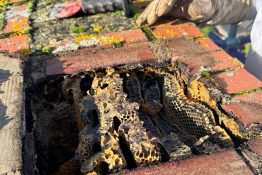
Honey bees play an important role in our environment, so when a colony settles in the wrong place, the aim should always be to find the safest and most responsible solution.
In some cases, bees may only be passing through and can be left alone. In other cases, especially when honey bees have settled inside a chimney, roof space, wall cavity or building structure, professional extraction may be needed.
At Helliar Pest Control, we provide safe honey bee extraction and relocation services across Somerset, Dorset and the wider South West. Where possible, we aim to remove and relocate honey bees rather than destroy them, helping to protect the colony while also making the property safe.
Why timing matters with honey bee extraction
Bees are valuable pollinators, and a settled colony can contain honeycomb, wax, brood and a queen bee. Removing them properly takes care, planning and experience.
The time of year can make a big difference. Between April and August, colonies are usually more active, easier to assess and better placed to recover after relocation.
This seasonal window gives the bees a stronger chance of survival once they have been moved to a safer and more suitable location.
Why April to August is the best window for bee relocation
April to August is often the best time for honey bee extraction because it falls during the warmer, more active part of the bee season.
During this period, bees are foraging, building stores and developing the colony. This can make it easier to understand the size and position of the colony, locate the main activity, and plan a safe removal.
It also gives the colony time to settle again after relocation before the colder months arrive. If extraction is left too late in the year, the bees may have less time to recover and build up enough strength for winter.
That is why early advice is always recommended if you notice honey bees entering a chimney, roof, wall or other part of a property.
Signs honey bees may have settled in your property
A few bees in the garden is usually nothing to worry about. However, repeated activity around the same part of a building can be a sign that a colony has settled inside.
Common signs include:
- Bees Entering And Leaving The Same Hole Or Gap
- Regular Activity Around A Chimney, Roofline Or Wall Cavity
- A Low Humming Sound From Inside A Wall Or Roof Space
- Bees Appearing Indoors Near Windows Or Fireplaces
- Wax, Honey Or Staining Around An Entry Point
- Increased Bee Activity During Warm, Sunny Weather
If you notice these signs, avoid blocking the entrance. This can trap bees inside the building and may cause them to find another way into the property.
Honey bees in chimneys, roofs and walls
Honey bees often choose sheltered spaces where the colony can build comb and remain protected from the weather. Chimneys, roof spaces, soffits, wall cavities and outbuildings can all become suitable nesting places.
Once bees are established, the issue can become more complex. Honeycomb and wax may remain inside the structure, and if this is not dealt with properly, it can attract other insects or create further problems later on.
Professional extraction is about more than simply removing the bees. It may also involve assessing access, removing comb where possible, clearing the affected area and reducing the chance of another colony being attracted back to the same place.
Why honey bee extraction is different from wasp nest treatment
Honey bees and wasps are often confused, but they need to be handled very differently.
Wasps can become aggressive around nests and are usually treated when they pose a risk to people. Honey bees are pollinators and, where possible, should be protected and relocated.
A honey bee colony may also be much larger and more established than people expect, especially if it has been inside a chimney, roof or wall for some time.
This is why it is important to identify the insect correctly before taking action. Treating bees as if they are wasps can lead to unnecessary harm and may create avoidable problems for the property.
Why you should not use DIY sprays or block the entrance
It can be tempting to try and deal with bees yourself, especially if they are entering a visible gap. However, DIY sprays, foam, sealants or blocked entrances can make the situation worse.
Blocking the entrance may force bees deeper into the property or into living spaces. Sprays can harm the colony and may still leave honeycomb, wax and honey behind inside the structure.
If bees are in a chimney, wall or roof, the safest option is to get professional advice before doing anything. This helps protect the bees and gives you a much better chance of solving the problem properly.

What happens during professional honey bee extraction?
Every honey bee extraction is different, because every property and colony is different. The first step is usually to assess the site and understand where the bees are entering, how established they appear to be and what access is available.
A professional extraction may involve:
- Identifying The Bee Species
- Assessing The Entry Point And Nest Location
- Planning Safe Access To The Colony
- Removing Bees As Carefully As Possible
- Removing Comb, Wax Or Honey Where Practical
- Relocating The Colony Where Possible
- Advising On Proofing And Future Prevention
- Leaving The Area Safe And Tidy
The aim is to protect the property while giving the bees the best possible chance of survival.
Safe bee relocation across Somerset and Dorset
Helliar Pest Control provides honey bee extraction and relocation across Somerset, Dorset and the surrounding areas.
We work with care and respect for the bees, while also understanding that a colony inside a home or business can cause concern. Our approach is practical, professional and focused on finding the right solution for the situation.
Whether bees are in a chimney, roof space, wall cavity, outbuilding or commercial property, we can assess the problem and advise on the safest next step.
When should you call Helliar Pest Control for bee control?
If you notice honey bees around your property between April and August, it is worth getting advice early.
You should contact a professional if:
- Bees Are Entering A Chimney, Roof Or Wall
- Bee Activity Is Increasing Around One Area
- Bees Are Appearing Inside The Property
- You Can Hear Buzzing From A Wall Or Ceiling
- You Are Unsure Whether You Have Bees Or Wasps
- You Want To Avoid Harming The Colony
- You Need Advice On Safe Extraction And Relocation
Acting early gives more options and can help avoid more complicated work later in the season.
You can Protect bees while protecting your property

Professional Bee Removal & Relocation Services
Contact Us We provide honeybee removal services across Somerset, Dorset, and surrounding areas. All removals are conducted with safety, legality, and bee conservation in mind.
Check out more of our recent work and client reviews on our Facebook page.